


Bringing a new puppy home to Jacksonville is a life-changing milestone, but it often comes with one major, messy stressor: learning how to potty train a puppy. Whether you’re navigating life in a high-rise apartment in Downtown Jax or managing a busy household with a large fenced-in yard in Mandarin, the “potty problem” is the number one concern that keeps new dog parents awake at night.
At Unleash Fido, we don’t believe in “magic wands” or 24-hour instant success stories. Every dog is a unique individual, some “get it” in a single weekend, while others require significantly more patience, repetition, and professional guidance to fully understand the house rules. Instead, our secret to success isn’t about forcing the dog through rigid discipline; it’s about setting a professional, sustainable schedule that actually suits the parents’ lifestyle.
Table of Contents
- Why a Schedule Beats a “Guarantee”
- The Science of How to Potty Train a Puppy
- The Unleash Fido Approach: 3 Core Pillars
- Mastering the Jacksonville Climate Factor
- The Power of Consistency Over Perfection
- Essential Supplies for Success
- When to Call a Professional Jacksonville Dog Trainer
Why a Reliable Schedule Beats a “Marketing Guarantee”
You’ve likely seen national trainers online who “guarantee” a fully potty-trained dog in just three days. In the professional world, we know that potty training is actually a complex combination of physical biological development and consistent, clear communication. If a puppy’s bladder and sphincter muscles aren’t physically mature enough to hold it, no amount of “guaranteed” training or marketing promises will change that biological reality. A guarantee often puts undue pressure on the owner and the dog, leading to frustration when nature inevitably takes its course.
By focusing on a proven puppy potty training schedule, we take the guesswork, the anxiety, and the midnight scrubbing out of the process. Instead of constantly wondering if your dog needs to go, you will follow a meticulously planned roadmap so you know exactly when they need to go. This proactive approach dramatically reduces accidents, lowers your stress levels, and builds a massive foundation of trust between you and your new best friend. By setting them up for success rather than waiting for them to fail, you ensure they feel confident rather than punished.
The Science of How to Potty Train a Puppy
Understanding the “why” behind the “how” is the first step toward maintaining a clean house. Puppies have very small bladders and incredibly high metabolisms, meaning waste is processed quickly and frequently. According to expert research from the American Kennel Club, a puppy can generally control their bladder for about one hour for every month of their age, and that is usually under calm, restful conditions.
This means if your puppy is 3 months old, they can realistically only hold it for about three hours during the day. If you are working a 9-to-5 job in Jacksonville and leaving them alone without a break or a visitor, you are essentially setting them up to fail. Furthermore, excitement, high water intake, and vigorous play can shorten that window even further, as physical activity stimulates the digestive system and bladder. Part of learning how to potty train a puppy effectively is acknowledging these physical limitations and adjusting your daily routine to accommodate them until they grow physically capable of longer intervals.
The Unleash Fido Approach: Potty Training for Busy Parents
Jacksonville parents are busy. Between commuting on I-295, handling school drop-offs, and trying to enjoy our beautiful local scenery, you need a plan that fits into your actual life, not a textbook ideal. Our method focuses on three core pillars designed for maximum efficiency and minimal mess.
1. The Proactive Timing Rule
Don’t wait for your puppy to tell you they have to go by scratching at the door or whining. By then, they are already at their physical limit, and an accident is imminent. We teach you to take them out after every major transition in their day: immediately after waking up from a nap, right after eating or drinking, and especially after any vigorous play session. Transition periods are when the body naturally “resets” and the urge to go is strongest.
2. Strategic Crate Training
When used correctly and humanely, a crate is a puppy’s best friend and their “den.” Dogs have a natural instinct not to soil the place where they sleep or relax. We show you how to use a crate as a “management tool” that keeps your puppy safe when you can’t supervise them and helps them develop the necessary muscle control for long-term success. The crate should never be used as a punishment, but rather as a quiet space that encourages them to “hold it” until the next scheduled break, teaching them the valuable skill of bladder control in a safe environment.
3. High-Value Positive Reinforcement
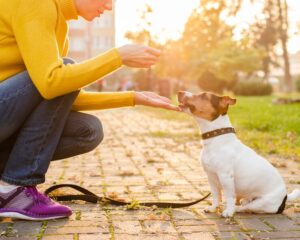
When your puppy gets it right, they need to know it! Verbal praise is good, but a tangible, high-value reward is better. We recommend using “stinky,” high-value treats that are reserved specifically and exclusively for potty successes. This creates a powerful, lasting mental connection: “If I go outside on the grass, I get the best treat in the world.” Over time, the dog becomes eager to perform the behavior just for the reward, turning a chore into a highly motivated game.
Mastering the Jacksonville Climate Factor
Training a dog in Florida comes with its own set of environmental rules that trainers in more temperate states don’t have to worry about. During our notoriously hot and humid summer months, your puppy will likely drink significantly more water to stay hydrated and cool. This is a healthy response to the heat, but it means the “one hour per month of age” rule might shrink considerably during the peak of summer.
More water consumption inevitably leads to more frequent trips outside. Furthermore, the sudden, booming afternoon thunderstorms common in North Florida can scare a young puppy, making them hesitant to step onto the wet grass or go outside at all. We help you navigate these local hurdles, ensuring your how to potty train a puppy strategy remains consistent whether it’s a sunny day at Neptune Beach or a rainy, thunderous afternoon in Riverside. We’ll even discuss how to create “safe” rainy-day potty spots for the most thunder-shy pups.
The Power of Consistency Over Perfection
One of the biggest mistakes owners make is getting discouraged by a single accident. If an accident happens on your rug, it isn’t a failure or a sign that the training isn’t working, it’s just a piece of data. It tells us we need to adjust the timing of the last break, re-evaluate the environment, or perhaps increase the level of supervision we were providing.
We work with Jacksonville parents to identify their dog’s subtle “tells”, the sudden circling, the intense sniffing of a specific spot, or the quiet change in focus from a toy to the floor. Learning these signs is a vital part of knowing how to potty train a puppy because it allows you to intervene and redirect them to the appropriate spot before the accident occurs. Consistency in your reaction is key; stay calm, clean it up with the right products, and adjust the schedule for next time to prevent a repeat performance.
Essential Supplies for Your Training Journey
To succeed, you need the right tools in your arsenal to manage the environment and reward the behavior effectively. We recommend every Jacksonville puppy owner have the following:
- Enzymatic Cleaner: This is non-negotiable. Regular household cleaners might smell fresh to humans, but they don’t remove the pheromones and proteins that tell a dog “this is a bathroom.” You need a professional-grade enzymatic cleaner to completely break down those odors so the puppy doesn’t return to the same spot.
- Long Leash: This is especially useful for those late-night trips to the backyard or for parents living in apartment complexes near Town Center where you need to walk to a designated pet area while maintaining control.
- High-Value Treats: Think freeze-dried liver, small bits of plain chicken, or specialized training treats. The more “rewarding” the treat, the faster the mental association is built when mastering how to potty train a puppy.
- Patience and a Sense of Humor: This is the most important “supply” you can bring to the table. Puppies aren’t trying to be difficult or spiteful; they are just learning a brand-new language in a brand-new world, and they need you to be their steady guide.
When to Call a Professional Jacksonville Dog Trainer
Sometimes, despite your best efforts and a perfect schedule, the process stalls. This can happen due to underlying medical issues (like UTIs), deep-seated anxiety, or simply a breakdown in communication between owner and dog. If you feel like you’ve hit a wall and your house is suffering, professional help can save your sanity, your relationship with your pet, and your carpets.
When you work with Unleash Fido, you aren’t just paying for a “quick fix” that won’t stick. You’re investing in a proven, balanced system. While we don’t offer unrealistic or gimmicky guarantees, we do guarantee that you will leave our program with a customized feeding and bathroom schedule, expert advice on crate management, and the confidence to handle the unique challenges of Jacksonville living with a well-behaved, potty-trained pup. Our goal is to ensure you know how to potty train a puppy without the constant stress of potential accidents.
Conclusion: Take the Stress Out of Puppyhood Today
Learning how to potty train a puppy shouldn’t be a constant battle of wills or a source of tension in your home. It is a transitional period that requires a solid plan, a bit of local expertise, and a lot of grace for both you and your dog. By getting your dog on a professional routine that works for your household, you’ll find that the “puppy phase” becomes the joyful, bonding experience it was always meant to be.
Ready to stop cleaning carpets and start enjoying your dog? Contact Unleash Fido today for a professional consultation on our puppy training programs in Jacksonville, FL. We will help you find the schedule that works for you and your pup, so you can spend less time worrying and more time playing!